Twice Taken
Kim Kun-hoo's Odyssey through Exile, Purge, Abduction, and Reclamation
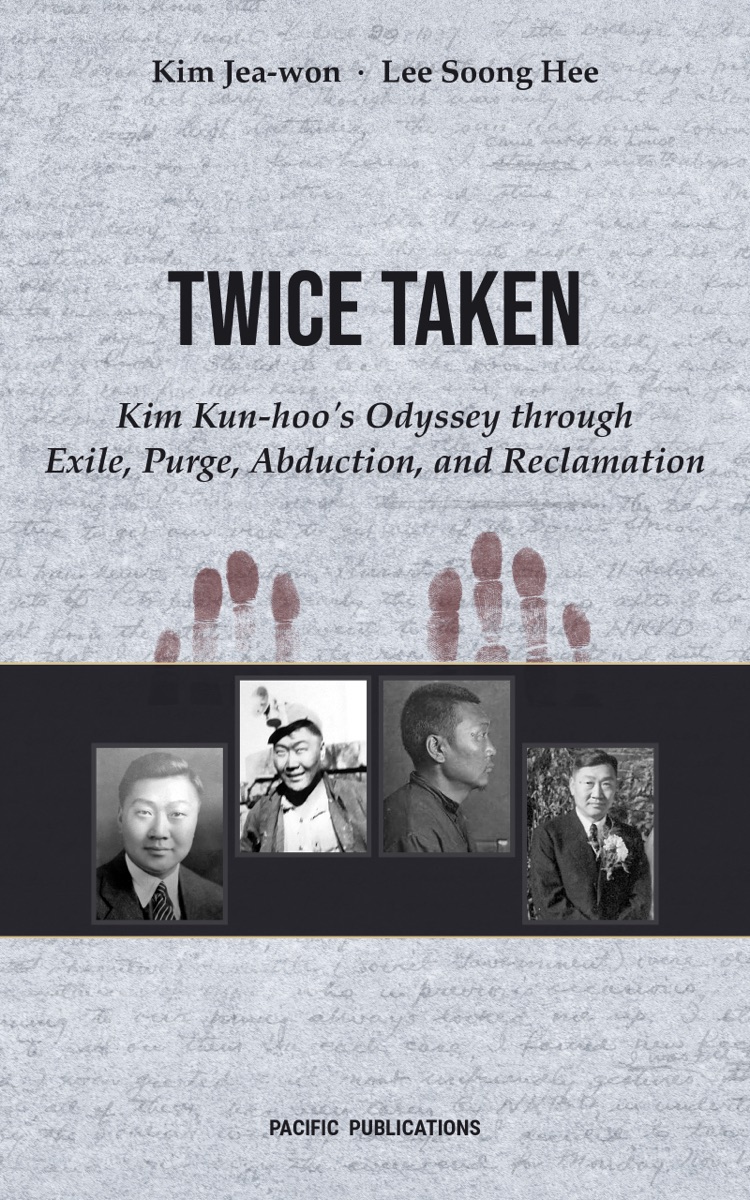
Twice taken. Once by Stalin. Once by Kim Il-sung. Never returned.
The book
Kim Kun-hoo was born in Korea on the eve of Japanese annexation and followed his independence-activist father into exile in China as a teenager. He came of age there as Ching Chien-heo before crossing the Pacific as Herbert Kim to study mining engineering at the Colorado School of Mines and Columbia University.
Recruited to the Soviet Union in 1930, he rose to technical deputy director of the Zholymbet gold mine. In 1937, during Stalin’s Great Purge, the NKVD arrested him as Герберт Ким. Sentenced to twenty-five years, he served nearly five, and was released in 1942 through Chinese diplomatic intervention.
He returned through wartime China to a liberated Korea and led the mining department of the Korean Tungsten Company, only to be abducted by the North Korean People’s Army at the outbreak of the Korean War. He was never seen again. His daughter, born months later, never met him.
Drawing on archives in Kazakhstan, Russia and the United States, family memoirs and decades of scholarship, this volume reconstructs a life that crossed four countries, four languages and four political systems. It includes the handwritten memoir Kim wrote after his release and sent to an American friend, now held at Harvard’s Yenching Library.
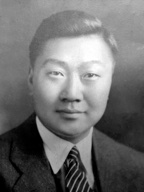
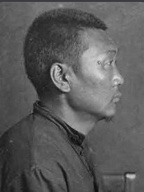
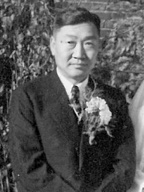
One man, four names
His memoir
In 1948–49 Kim Kun-hoo wrote his own account of his arrest in Stalin’s purge in November 1937, a death sentence, and four and a half years in Soviet prisons and labor camps. The first chapter, “My Arrest, Trial, and Nine Days in a Death Cell,” is free to read online, and the complete memoir is free by email.
I was one of the many millions who had been stolen away in the dead of the night.
Praise
A fascinating read, at once heart-warming and heart-wrenching, a story not to be missed.Rev. Steven L. Shields, FRAS
Past President, Royal Asiatic Society Korea
This book vividly testifies to the agonizing fate a young Korean man had to face head-on amidst the turbulent waves of his era.Professor Namsub Kim
Modern Russian History, Seoul National University of Science & Technology
Kim Kun-hoo’s life and deeds are history. The story of how he endured and survived Soviet prisons and camps moves us at the deepest human level, and the path he traveled shows the strength and drive of the Korean people.Professor Emeritus Han See Jun
Dankook University; former Director, The Independence Hall of Korea
The editors
Kim Jea-won
Editor, daughter of Kim Kun-hoo. Ph.D. in Philosophy (History of Western Art), University of Munich. Former Professor and Dean of the College of Fine Arts, Incheon Catholic University, Korea. Former President of Contemporary Art History Association in Korea.
Lee Soong Hee
Co-Editor. Ph.D. in Political Science, University of Munich. Professor Emeritus at the National Defense University, Korea. Former Director of Research Institute on National Security Affairs.
Get the book
Librarians and booksellers can order through Ingram, GOBI and Baker & Taylor. Readers can ask any library to acquire it by quoting a number below.
- Hardcover
- ISBN 979-8-9962421-0-8
- Paperback
- ISBN 979-8-9962421-1-5
- Library of Congress
- LCCN 2026943022